
You have probably wondered how much HVAC maintenance you can safely handle yourself before you risk breaking something or voiding a warranty. You want to keep your home comfortable and your power bills reasonable, but you do not want to turn a simple task into a costly repair. Online advice does not make it easier, since one article tells you never to touch your system and the next shows someone tearing it apart with a basic tool set.
We talk with Winston-Salem homeowners every day who are in the same spot. Many are already changing filters or rinsing around their outdoor unit, but they are not sure if they are doing enough or if they are crossing a line. Others have avoided touching anything for years and wonder if that is part of why the system seems tired or noisy now. They want clear, honest guidance on where DIY helps and where it hurts.
At All-Phase Heating & Cooling, our family-owned, locally operated team works on heating and cooling systems across Winston-Salem and nearby communities every day. Our NATE-certified, licensed, and insured technicians see what good DIY habits look like and where well intentioned tinkering goes wrong. In this guide, we will walk through what you can confidently do yourself, what should stay with a professional, and how to combine both for the best comfort and efficiency in your home.
What DIY HVAC Maintenance Really Means for Winston-Salem Homes
Before you decide what to do yourself, it helps to understand what “maintenance” actually covers. There is a big difference between light homeowner upkeep and the kind of testing and adjustments our technicians perform during a tune up. Light maintenance means simple, surface level tasks such as changing filters, clearing vents, and making sure air can move through the system. Technical service means opening panels, testing electrical components, checking refrigerant levels, and cleaning deep inside the equipment.
In Winston-Salem, local conditions push systems harder than many national guides assume. Our humid summers keep air conditioners running for long stretches, and our chilly winter nights keep furnaces and heat pumps busy too. Pollen seasons, red clay dust, and older homes with mixed ductwork all affect how quickly filters load up and how easily airflow gets restricted. This is why “every three months” for filters, which you see in many generic articles, often is not enough here during peak use.
DIY HVAC maintenance should focus on tasks that are safe, repeatable, and do not require tools you do not already own. If a task involves live electrical parts, sealed refrigerant, gas piping, or disassembling more than access panels and registers, it has moved beyond DIY and into true service work. That line matters, because sealed systems and electrical components can be damaged or made unsafe by small mistakes that are not obvious until later.
Our role is to help you use your time wisely. You do not need to call us to move a box away from a return vent, and you should not be nervous about swapping a filter. On the other hand, if something involves testing voltage, pressures, or combustion, that belongs to a trained technician with the right tools. Once you see the difference between light upkeep and technical service, it becomes much easier to decide what to handle yourself and what to leave to us.
Safe DIY HVAC Tasks Most Homeowners Can Handle
There are several simple tasks almost every homeowner in Winston-Salem can safely take on. These do not require advanced tools or training, and they make a real difference in how efficiently your system runs. They also help you spot small issues early, so you can call for help before they turn into a no-heat or no-cool situation.
Filter changes are the biggest and most effective DIY step. In many local homes, checking the filter once a month during heavy use is a good starting point, especially in summer and during high pollen periods. If you have pets, smoke indoors, or live near a busy road, you may find that filters load up faster. When a filter looks gray and fuzzy or you cannot see light through it, it is time to replace it. A clean filter lets the blower move air without fighting extra resistance, which reduces strain on the motor and can help keep energy use in check.
Another worthwhile task is keeping airflow clear around vents and returns. Walk through your home and make sure supply vents are open and not covered by rugs, furniture, or stacked storage. Check return grilles for dust and gently vacuum the surface if you see buildup. When vents or returns are blocked, your system has to work harder to push and pull air, which can lead to hot and cold spots and extra wear on components. Over time, that extra strain can show up as noisy operation or uneven comfort.
Outside, you can help your system by keeping the outdoor unit free from debris. That means gently clearing leaves, mulch, and grass clippings away and aiming for at least two feet of clear space around the unit. Trim back shrubs that have grown too close and avoid stacking items on or against the cabinet. You can lightly rinse the outside coil fins from the top down with a garden hose set to a gentle stream, as long as you do not use high pressure that could bend the fins. This helps keep heat moving out of the refrigerant more efficiently.
Simple thermostat checks also fall into the DIY column. You can verify that the thermostat is set to the correct mode, replace batteries if it uses them, and confirm that programmed schedules still match your routine. If you notice that the temperature on the thermostat does not match how the room feels, you can make a note of that for your next service visit. When we come out, we can test and talk through whether repair or replacement makes sense.
These basic habits are the same kinds of steps we encourage for homeowners in programs like a Home Care Club. They are not complicated, but when you do them consistently, they support the work our technicians perform and help your system run closer to the way it was designed.
HVAC Jobs You Should Leave to a Licensed Technician
Just as there are tasks you can safely tackle, there are others that should stay firmly in professional hands. These are jobs that involve electricity, refrigerant, gas, or deep internal cleaning. They might look simple in a video, but small errors can create safety hazards, hidden damage, or future breakdowns that cost far more than a service visit.
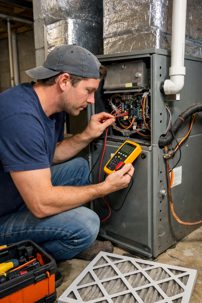
Anything involving live electrical components belongs to a licensed technician. That includes testing or replacing capacitors, contactors, relays, and control boards, as well as working inside high voltage disconnects. These parts help motors start and run, and they sit in circuits that can deliver a serious shock even after power is turned off at the thermostat. Our technicians use meters to confirm power is truly off and to test components against manufacturer specifications, which is not something most homeowners can safely do.
Refrigerant work is another clear non DIY area. The refrigerant circuit in your air conditioner or heat pump is sealed and designed to carry heat between your indoor and outdoor coils. Adjusting refrigerant levels or opening this circuit without proper training and certification is risky for your system and can violate environmental regulations. Incorrect refrigerant charge can cause icing, compressor damage, or reduced efficiency, and these issues may not show up immediately. Our NATE-certified technicians use gauges and temperature readings to measure system performance and adjust within the narrow range the manufacturer intends.
Gas furnaces and combustion components need careful handling as well. Adjusting gas valves, burners, or flue connections without training can create fire or carbon monoxide risks that are not obvious until later. During maintenance, we inspect burners, heat exchangers, and venting paths and look for signs of improper combustion or leaks. Those checks protect both your comfort and safety, and they are not something we recommend treating as a weekend project.
Deep coil cleaning and internal drain work often sound like cleaning chores, but they are easy to get wrong. Using the wrong chemicals or too much water in the wrong place can push dirt further into the coil or cause water damage. Accessing indoor coils frequently requires removing panels and working near electrical components and sharp metal edges. Our team is insured and trained for this type of work and has access to coil cleaners and tools designed for HVAC use, not general household cleaners that can harm components.
Many manufacturers expect systems to be serviced periodically by licensed professionals, and they may look at service records if a major warranty claim arises. Visible signs of DIY refrigerant work or wiring changes can complicate those conversations. Keeping this category of tasks in our hands helps protect both your system and any applicable warranties.
How Professional Maintenance Complements Your DIY Efforts
When you handle basic upkeep and we handle the technical work, your system gets the best of both worlds. Your day to day attention keeps filters clean and airflow moving, while our scheduled maintenance visits dig into the parts of the system you cannot see. Together, those actions help your equipment run closer to its designed capacity and can reduce the chance of sudden failures.
During a typical maintenance visit, we go far beyond a quick visual check. Our technicians verify electrical connections, look for signs of heat or arcing at terminals, and test capacitors to see if they are still within their rated range. We measure voltage and amperage on key components to see if motors are drawing more power than they should, which can be an early sign of wear. These measurements tell us how the system is actually performing, not just whether it turns on.
We also look at temperatures and refrigerant related readings. For cooling systems, we check temperature differences between the air going into and coming out of your indoor unit. We may measure refrigerant pressures and temperatures to confirm the system is moving heat properly. On heat pumps, we confirm that the system is switching between heating and cooling modes as it should. For gas furnaces, we examine burner operation and flame patterns to see whether combustion appears clean and stable.
Another key part of maintenance is checking the condensate drain path and inspecting accessible coils. A partially clogged drain can lead to water leaks that show up as ceiling stains or damage around the indoor unit. Dirt on the indoor coil insulates it and makes it harder to absorb or release heat, which hurts efficiency. Cleaning and clearing these components in a controlled way helps prevent those headaches later and keeps the system running closer to its intended performance.
At All-Phase Heating & Cooling, owner involvement on every job means Brad or Gina are there to make sure this process is carried out with care and attention. Many homeowners in Winston-Salem choose maintenance plans, such as a Home Care Club, to make these visits predictable and easy to remember. These plans are not a replacement for your own good habits, but they are a practical way to make sure the technical side of professional maintenance does not fall through the cracks.
DIY Mistakes We See All the Time in Winston-Salem
We appreciate when homeowners take an active role in caring for their HVAC systems, but we also see patterns where good intentions create new problems. Understanding these common missteps can help you avoid turning a simple DIY task into something that shortens your system’s life or hurts efficiency. The goal is not to discourage you, but to help you focus your efforts where they really pay off.
One frequent issue is aggressive cleaning around the outdoor unit. High pressure washers may seem like a fast way to remove dirt, but the force can easily bend delicate aluminum fins on the coil. Bent fins restrict airflow and reduce the unit’s ability to release heat. We also see cases where homeowners use strong household cleaners on coils or cabinet surfaces. Some of these products are corrosive or leave residues that attract more dirt, which means the system ends up dirtier and less efficient than before.
Another common mistake involves airflow inside the home. It is tempting to close vents in unused rooms to “force” more air into other spaces, but closing too many supply vents or blocking returns can upset the balance of the system. This raises static pressure in the ductwork, making the blower work harder. In some cases, this contributes to coils icing over in summer or furnaces overheating in winter. We have also found returns blocked by furniture or storage, which has a similar effect and can cause noisy airflow and uneven temperatures.
Thermostat habits can create trouble too. Constantly cranking the thermostat far up or down does not make the system heat or cool faster. It just makes it run longer, and in some cases it may push the system to operate in less efficient ranges. Frequent manual overrides of programmed schedules can also cause the system to cycle more than it needs to, which adds wear over time. Smooth, moderate changes and steady schedules usually treat the equipment more gently.
We sometimes arrive at a home after a breaker has been reset multiple times without understanding why it tripped. Repeatedly resetting a tripped breaker without diagnosing the cause can lead to more damage if a motor or component is failing. In those situations, there is often an underlying issue that needs attention, such as a failing capacitor, worn motor, or wiring problem. Those are good examples of where stopping DIY attempts and calling us protects both your safety and your equipment.
When you avoid these pitfalls and stick to safe tasks, your DIY efforts truly support your system instead of working against it. If you are ever unsure whether something is a good idea to try, a quick call for advice can keep a small question from turning into a larger repair.
How Often Should You Do DIY Maintenance and Call for a Tune Up?
Knowing what to do is one part of the equation. Knowing how often to do it is the other. In real Winston-Salem homes, the right schedule depends on your system, your household, and how you use your equipment, but there are reasonable starting points that work for many families. From there, you can adjust based on what you see and how your system responds.
For filters, checking once a month during heavy use is a practical habit. In spring and summer, when cooling runs frequently and pollen is high, many local homeowners find that filters need changing more often than the three month guideline printed on the package. In fall and winter, you may be able to stretch the interval a bit, especially if your home is less dusty and you do not have pets. The key is to inspect regularly and adjust based on what you see, rather than relying on a fixed date.
Outdoor units and indoor vents benefit from quick visual checks throughout the year. A monthly walk around the outdoor unit to clear leaves and trim plants is usually enough, along with occasional gentle rinsing when you notice dirt buildup. Inside, you can look for blocked vents and dusty returns whenever you clean or rearrange rooms. These small checks take only a few minutes and help maintain healthy airflow, which supports both comfort and system longevity.
Professional maintenance typically makes the most sense on a seasonal or annual schedule. Many homeowners choose to have us service cooling equipment in the spring, before hot and humid weather settles in, and heating equipment in the fall, before the first cold snap. At a minimum, a yearly tune up gives us a chance to catch developing issues and verify that your system is ready for the season ahead. The right frequency for you may depend on equipment age, usage, and any manufacturer recommendations tied to your warranty.
Maintenance plans, such as a Home Care Club with All-Phase Heating & Cooling, offer a convenient way to stay on top of those visits without having to remember dates yourself. We schedule the tune ups, you keep up with basic DIY tasks, and together we keep your system in better shape over time. It is a partnership that respects the work you are already doing and fills in the gaps where professional tools and training make the difference.
Red Flags That Mean DIY Is Not Enough
Even with good DIY habits and regular maintenance, systems can develop problems. The key is recognizing when something you notice is a sign to call a technician, not a situation to keep experimenting with on your own. Some symptoms point to deeper issues that can affect safety or cause more damage if you wait.
Unusual noises are one of the clearest warning signs. Grinding, screeching, buzzing, or loud banging from indoor or outdoor units usually indicate failing bearings, loose parts, or electrical issues. Persistent rattles can mean panels or components are not secure. While you can confirm that panels are properly latched, you should not be opening electrical compartments or trying to lubricate sealed motors yourself. These are situations where shutting the system down and scheduling a visit is the safer choice.
Visible ice on refrigerant lines or the outdoor unit during cooling season is another red flag. Ice can form when airflow across the indoor coil is too low or when refrigerant levels are not where they should be. Turning the system off to let the ice melt and checking your filter is a reasonable first step, but if the problem returns, there is likely a deeper airflow or refrigerant issue. Continued operation with icing can damage the compressor, which is one of the most expensive parts of the system.
Burning smells, sharp electrical odors, or a persistent musty smell from your vents also call for professional attention. A brief dusty smell at first startup after a long off period can be normal as dust burns off the heat exchanger, but anything that smells like burning plastic, hot wiring, or smoke is different. Likewise, a musty smell that does not go away may point to moisture problems in the system or ductwork. In these cases, it is safer to shut the system down and let us inspect before using it again.
Repeated breaker trips, rooms that never reach the set temperature, or energy bills that spike without a clear reason are additional signs that something is off. These issues can stem from failing components, duct problems, or control issues that DIY will not fix. Because we are a family owned, locally focused company, we approach these visits as an opportunity to explain what we find and lay out your options clearly, not to pressure you into a particular choice.
Knowing when to stop trying DIY and pick up the phone is part of taking good care of your home. If you are ever unsure, it is better to ask and get guidance than to keep resetting a breaker or running a system that is telling you something is wrong.
Get the Right Balance of DIY & Professional HVAC Care
A little consistent DIY maintenance goes a long way. Clean filters, clear vents, and a tidy outdoor unit help your HVAC system breathe and reduce some of the strain it faces in our Winston-Salem climate. When you pair those simple habits with regular professional tune ups and timely attention to warning signs, you give your equipment a much better chance to run efficiently and reliably.
At All-Phase Heating & Cooling, we see ourselves as your partner in that process. You handle the everyday steps you are comfortable with, and our NATE-certified, licensed, and insured team takes care of the technical work, inspections, and repairs that belong with a trained professional. If you have questions about what you can safely do yourself, or you are ready to schedule maintenance or talk about a Home Care Club style plan, we are always glad to walk through your options.
Call (336) 537-5047 to talk with our team or schedule HVAC maintenance for your Winston-Salem home.